
• Skip to main content
  • Skip to secondary menu
  • Skip to primary sidebar
  • Skip to footer
  • Home
  • About Statistics Teacher
Statistics Teacher

Statistics Teacher

Supporting the Teaching and Learning of Statistics

  • Submissions
  • Articles
    • 9-12+
    • 6-8
    • K-5
  • Announcements
  • Lesson Plans
    • Lesson Plans
    • Lesson Plan Archive
  • Resources
    • Free Webinars
    • Posters
    • Publications
    • Supplemental
  • Events
You are here: Home / 9-12+ / Lesson Plan: A Tale of One City and Two Lead Measurements

Lesson Plan: A Tale of One City and Two Lead Measurements

September 19, 2019

By Kirk Anderson and Mary Richardson, Grand Valley State University

Overview of Lesson

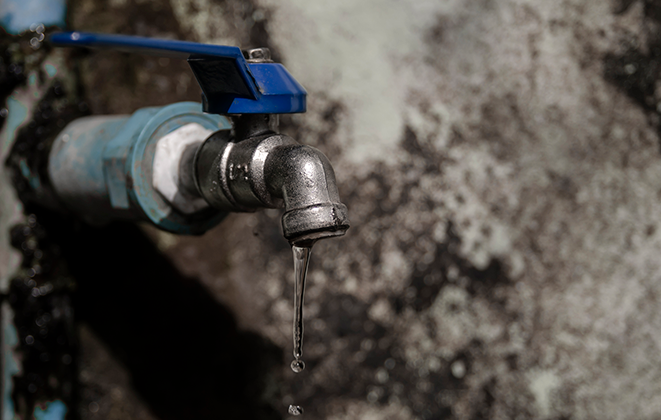
In 2014, a crisis began when the city of Flint Michigan switched its water supply in an effort to save money and the water became contaminated with lead. The EPA’s Lead and Copper Rule states that if lead concentrations exceed an action level of 15 parts per billion (ppb) in more than 10% of customer taps sampled, then actions must be undertaken to control corrosion and the public must be informed. From this, we see that the “action level” of 15 ppb is compared with the 90th percentile of the data. In this lesson, students will (1) read two news stories about the Flint water crisis and answer questions to demonstrate understanding of the articles, (2) compute the 90th percentile using two data sets (with and without outliers), (3) discuss the computations, (4) use CODAP or other software to create a dot plot, and (5) write a report tying it all together.

Download: PDF Lesson Plan
Download: Activity Handout
Download: Flint Data Set
Download: Excel Directions

Primary Sidebar

EDITORS’ NOTE

Student Competitions

  • ASA Data Visualization Poster Competition
  • Virtual Science Fair
  • ASA Statistics Project Competition

Categories

Archives

Archives (1982-2016)

Footer

About

Statistics Teacher (ST) is an online journal published by the American Statistical Association (ASA) – National Council of Teachers of Mathematics (NCTM) Joint Committee on Curriculum in Statistics and Probability for Grades K-12. ST supports the teaching and learning of statistics through education articles, lesson plans, announcements, professional development opportunities, technology, assessment, and classroom resources. Authors should use this form to submit articles or lesson plans.

Contact

Contact the Statistics Teacher editors for further information or to volunteer to write or review content.

Copyright © 2026 · American Statistical Association